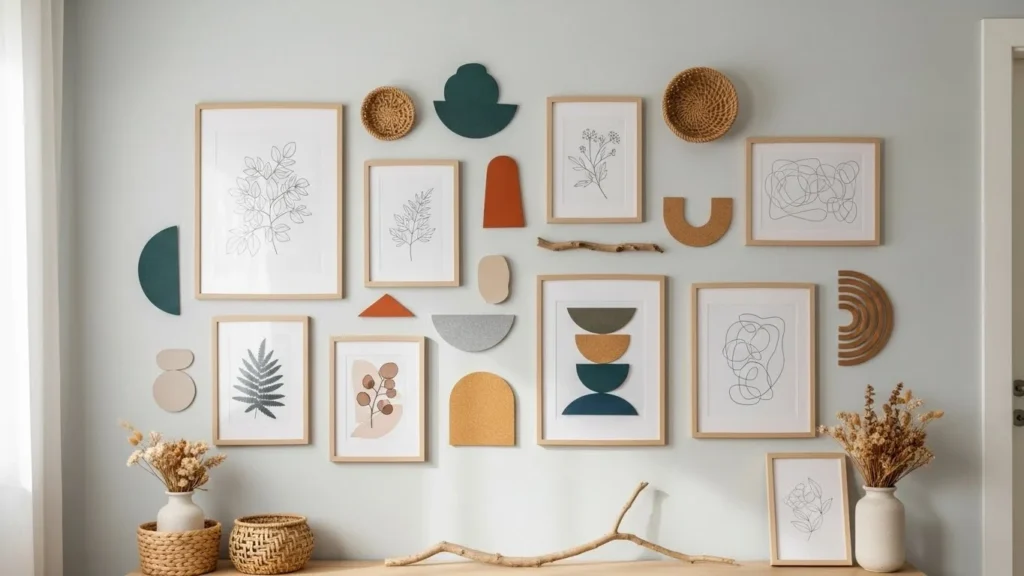
You don’t need to be an artist to create wall art that looks stylish and intentional. In fact, some of the most eye-catching wall decor comes from simple ideas, everyday materials, and a bit of creativity—not drawing or painting talent. If blank walls feel intimidating, this guide will show you how easy it is to make DIY wall art that looks polished, modern, and totally doable.
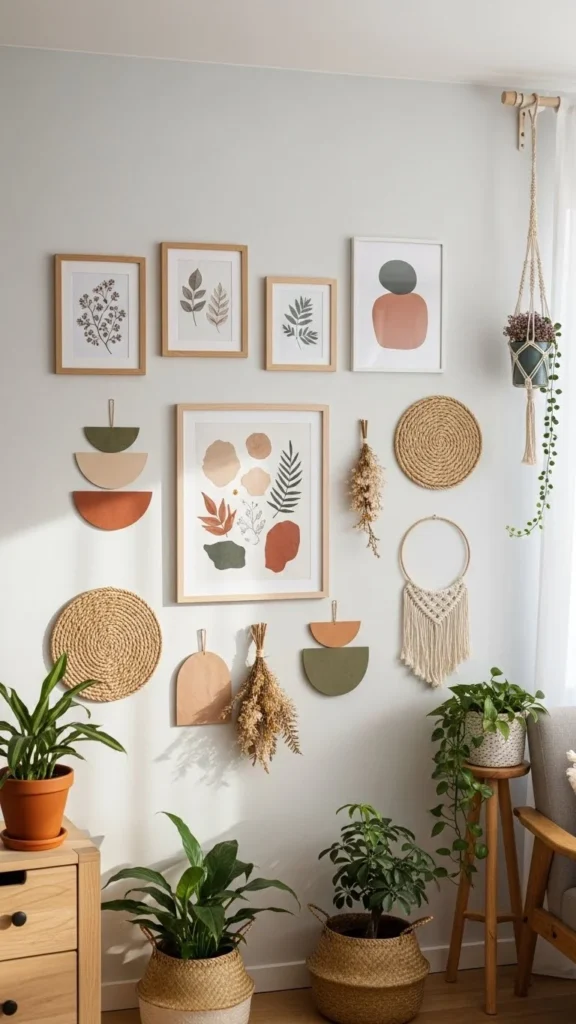
Start With the Right Mindset
The biggest mistake people make is thinking wall art must be “perfect.”
DIY wall art is about texture, repetition, balance, and color, not fine details. Once you let go of the idea that you need artistic skills, the process becomes fun and stress-free.
Remember:
- Simple shapes work best.
- Imperfections add charm.
- Neutral tones are forgiving.
- Repetition creates a cohesive look.
You’re designing decor—not a museum piece.
Frame What You Already Have
One of the easiest DIY wall art ideas is framing items that aren’t traditionally considered art.
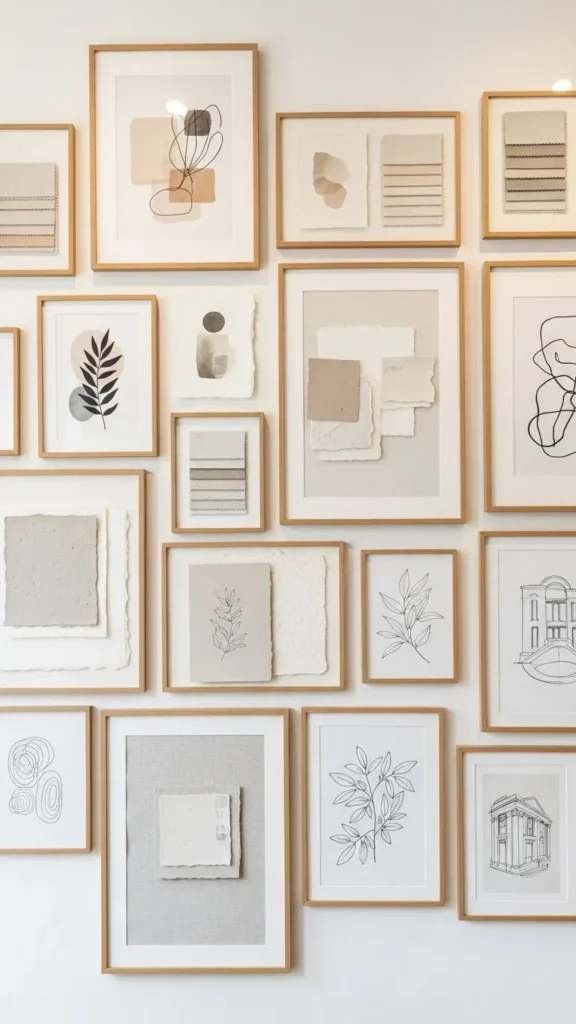
Great no-skill items to frame:
- Fabric swatches or scarves
- Wrapping paper or wallpaper samples
- Book pages or sheet music
- Pressed leaves or flowers
- Printable quotes or patterns
Use matching frames for a clean look, or mix frames for a relaxed, collected style. This instantly elevates simple materials.
Create Abstract Art With Paint (No Drawing)
Abstract art is forgiving and perfect for beginners.
You don’t need brushes or techniques—just color and movement.
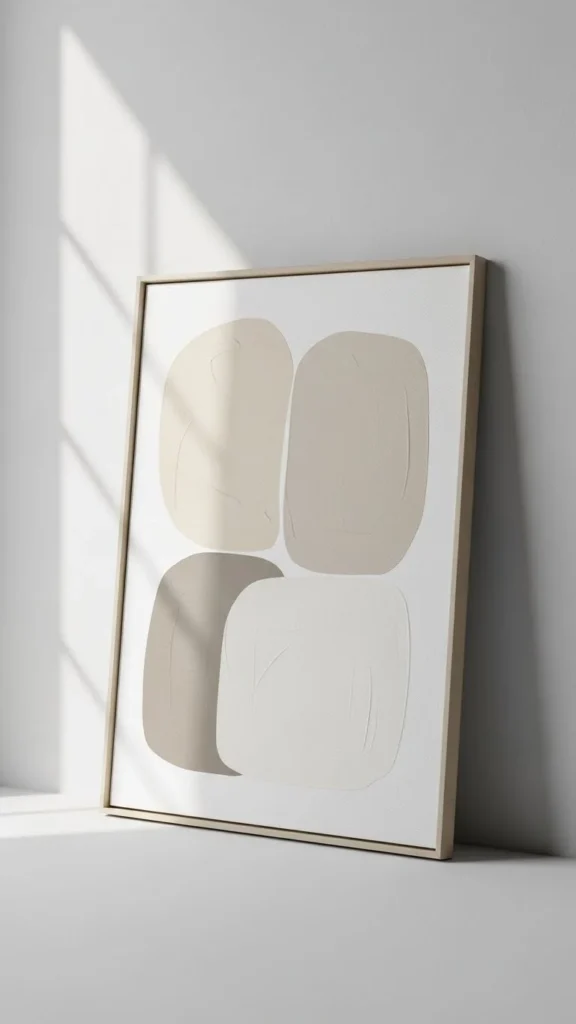
Easy abstract methods:
- Use a sponge or old cloth to dab paint.
- Pour paint and tilt the canvas gently.
- Use one or two colors plus white.
- Stick to neutral tones for a modern look.
Let the paint move naturally. Stop early. Overworking is the most common mistake.
Use Textures Instead of Images
Texture-based wall art looks high-end and requires zero drawing skills.
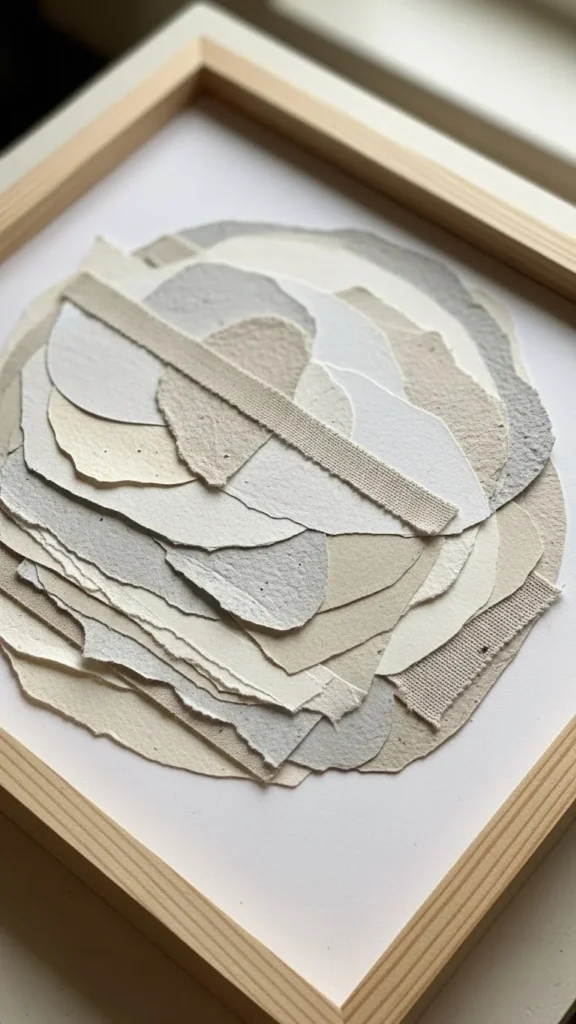
Beginner-friendly texture ideas:
- Layered cardstock or torn paper
- Fabric stretched over a frame
- Rope or yarn arranged in patterns
- Thin wood strips glued in rows
- Clay or plaster spread with a palette knife
Texture creates depth, which instantly makes art feel intentional and modern.
Make a Grid or Series (It Always Works)
When in doubt, repeat the same idea multiple times.
A grid or series tricks the eye into seeing structure and design—even if each piece is very simple.
Easy series ideas:
- Three identical frames with different tones
- Same abstract shape in different colors
- Repeated texture panels
- Monochrome prints in a row
Consistency matters more than complexity here.
Lean Art Instead of Hanging It
If hanging feels stressful, don’t do it.
Leaning wall art looks casual, stylish, and requires no tools.
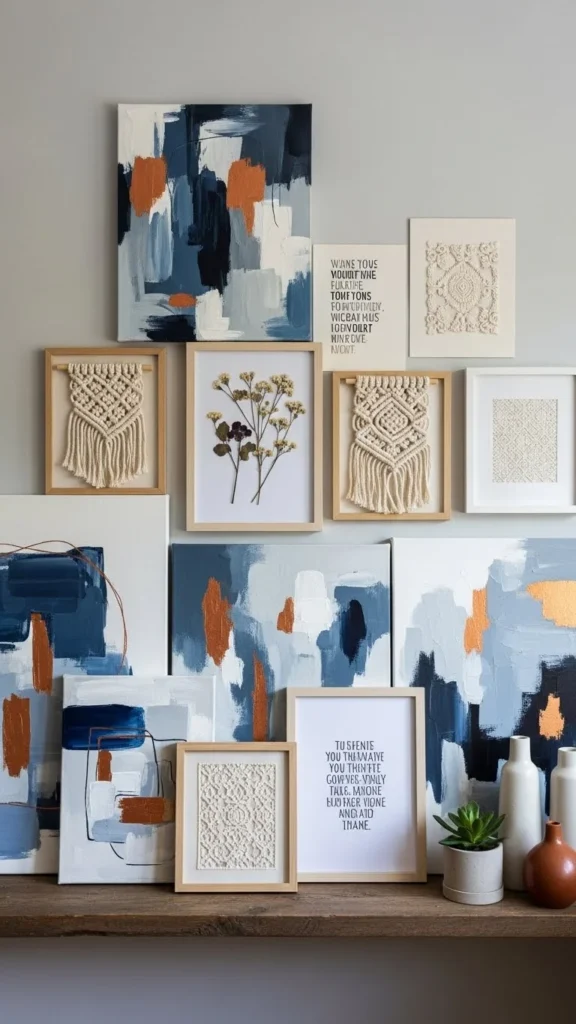
Where to lean art:
- On a shelf
- On a console table
- On the floor against the wall
- On a mantel
Layering different sizes adds depth and makes even simple art feel curated.
Use Everyday Objects as Art
Some objects look artistic simply because of their shape or material.
Turn these into wall art:
- Woven trays or baskets
- Hats or textiles
- Wooden cutting boards
- Metal trays
- Plates or shallow bowls
Hang them in groups for impact. Keep colors cohesive to avoid clutter.
Keep the Color Palette Simple
A limited color palette is your secret weapon.
Choose:
- All neutrals
- One main color + white
- Two soft complementary tones
This keeps everything looking intentional—even if the art itself is very simple.
Trust Simplicity
If you’re unsure, stop sooner rather than later.
Minimal DIY wall art almost always looks better than something overly busy. Blank space is not the enemy—it’s part of the design.
Final Takeaway
DIY wall art doesn’t require talent, training, or expensive supplies. With simple materials, repeated shapes, texture, and a calm color palette, anyone can create wall decor that feels stylish and personal.

DiyVisual is a DIY ideas resource for makers of every level. Our small editorial team researches and curates easy, budget-friendly craft, home decor, and handmade gift projects — explained step by step so anyone can recreate them at home with simple materials.