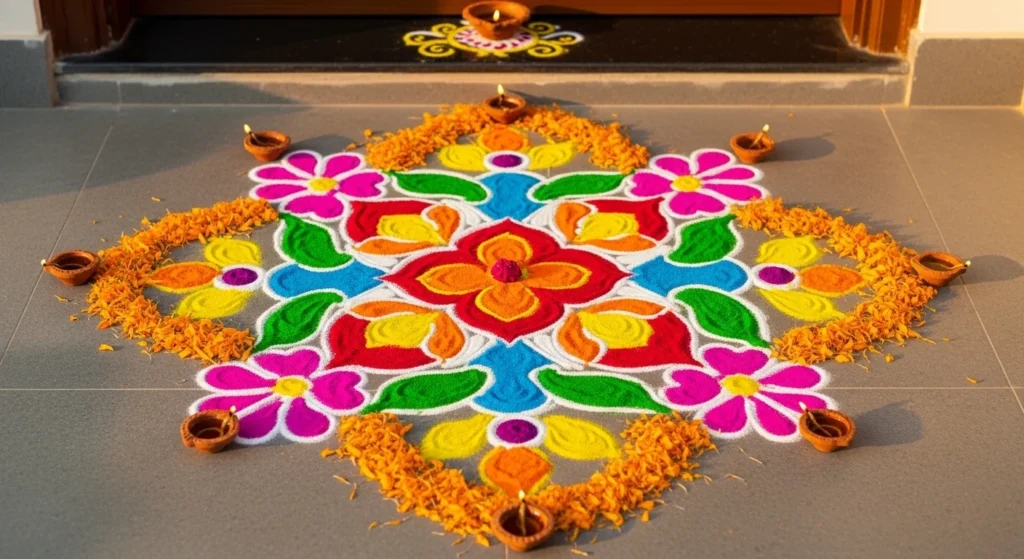
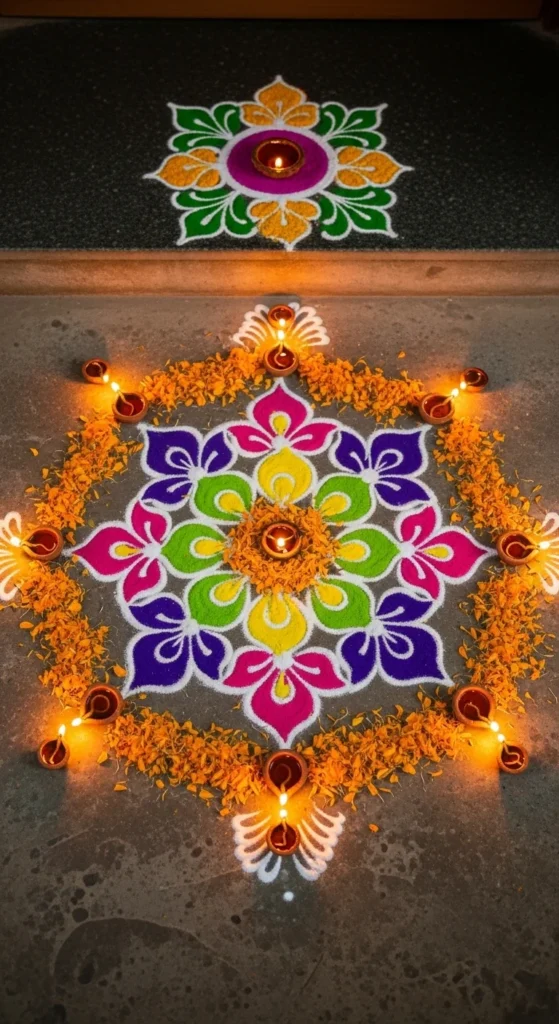
Simple rangoli designs add instant color and joy to any home entrance. These decorative floor patterns are part of daily traditions across many households and appear especially during festivals like Diwali. The good news is that beautiful rangoli does not require expert drawing skills. Most patterns start with simple shapes such as circles, petals, or dots.
Using everyday materials like rice flour, flower petals, chalk, grains, or colored powder, you can create festive designs in just a few minutes. Many rangoli styles also rely on repeating shapes. That makes them beginner friendly and easy to practice.
Below are 28 pretty simple rangoli ideas anyone can try. Each one focuses on easy techniques, affordable materials, and practical tips so you can decorate your doorway without stress.
1. Classic Four-Petal Flower Rangoli
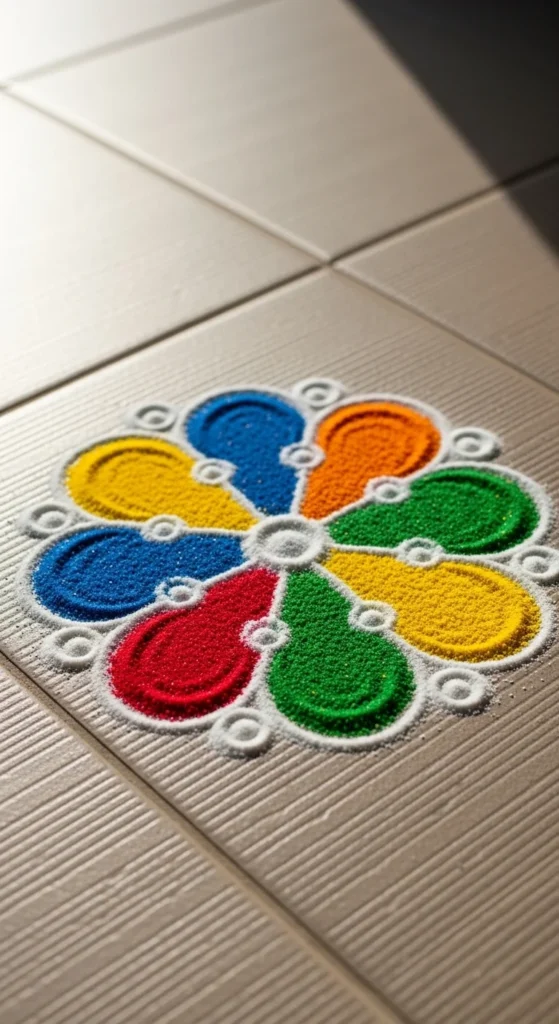
A four-petal flower rangoli is one of the easiest designs for beginners. Start by drawing a small circle in the center using rice flour or chalk. From that circle, create four rounded petals pointing in different directions.
Fill each petal with a different color powder. Yellow, pink, and orange combinations look cheerful near entrances. Around the flower, sprinkle small white dots to create a decorative border.
If colored powder is unavailable, kitchen spices can work too. Turmeric creates a bright yellow tone. Red chili powder adds deep red color. Rice flour keeps the outline clean.
This design works well in small spaces such as apartment entrances or balcony corners. It also takes less than ten minutes to finish.
For a festive touch, place a few marigold petals inside each petal. The mix of powder and flowers makes the design feel richer while still staying simple.
2. Easy Dot Grid Kolam Pattern
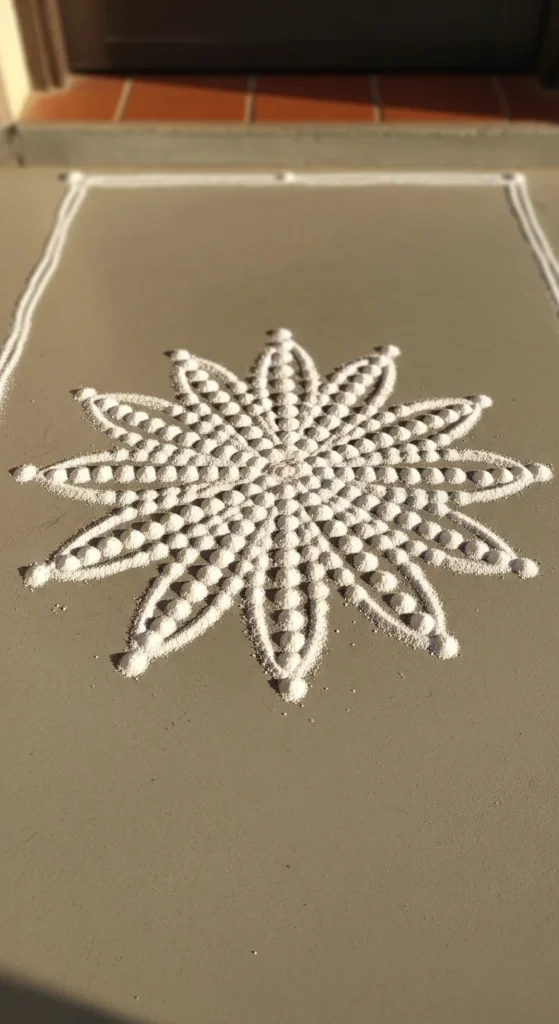
Dot grid rangoli designs are widely used in traditional kolam patterns. They help beginners draw symmetrical shapes without guessing spacing.
Start by placing rows of small dots using rice flour. A 5-4-3-2-1 grid works well for beginners. After creating the grid, connect the dots using curved lines that loop around them.
The result looks elegant even though the process is simple.
Rice flour works best because it flows smoothly between fingers. If a line goes wrong, brush it away and redraw it quickly.
This style is ideal for daily rangoli at home entrances because it takes only a few minutes.
You can decorate the finished pattern with colored dots or flower petals to give the design a festive look.
3. Simple Diya Circle Rangoli
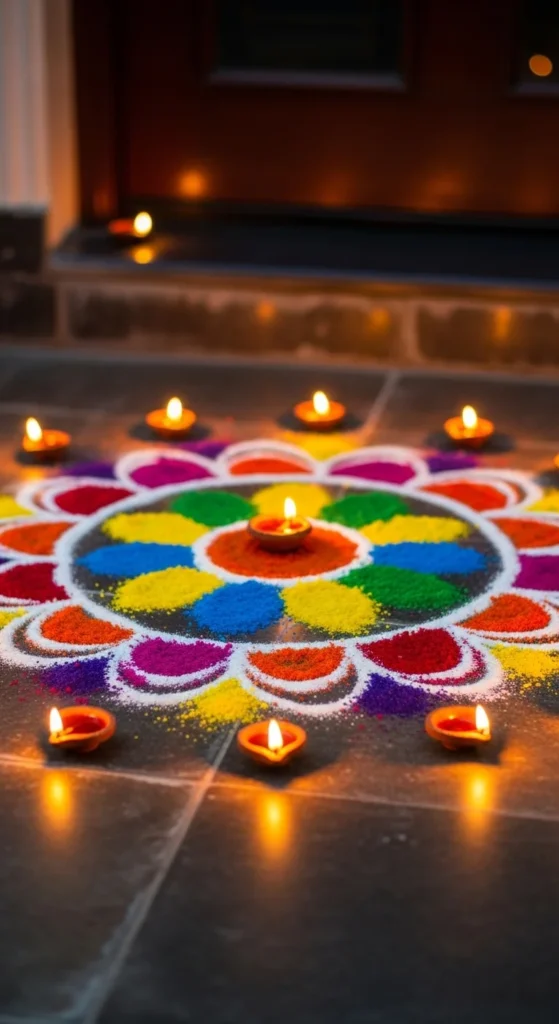
A diya circle rangoli looks beautiful during evening celebrations.
Draw a large circle using chalk. Inside the circle, create two or three colored rings using powder.
Next, sketch small diya shapes along the outer border of the circle. Each diya can be a simple oval with a small flame above it.
Fill the shapes with yellow and orange powder. When evening arrives, place real clay lamps around the design.
The warm lamp light highlights the colors and creates a welcoming entrance.
If you want a simpler version, draw the diya shapes using chalk instead of powder.
4. Flower Petal Rangoli
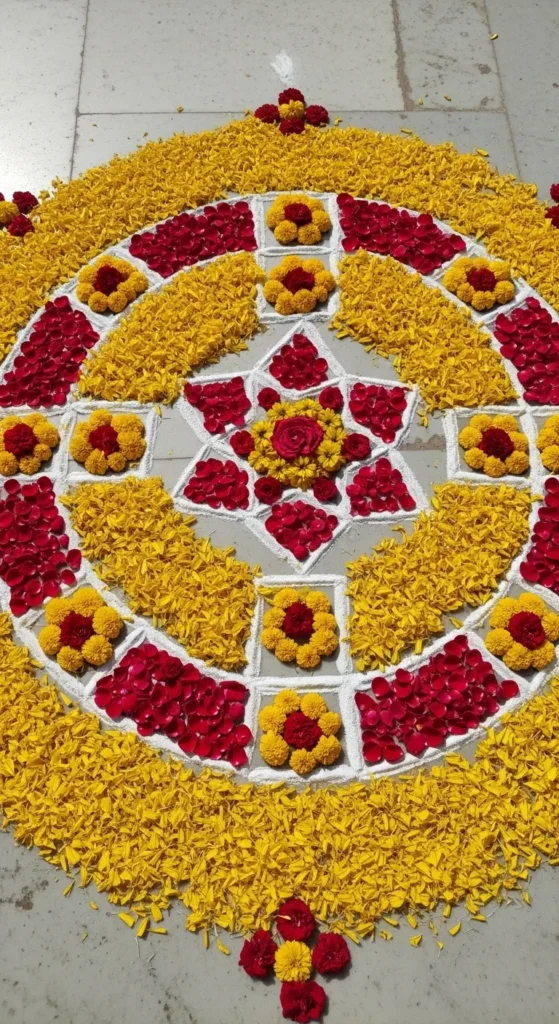
Flower petal rangoli is perfect for people who prefer eco-friendly decorations.
Begin by outlining a simple shape with chalk. Circles and floral patterns work well.
Fill the shapes with marigold or rose petals. Yellow and red petals create a vibrant contrast.
This design is quick to make and easy to clean afterward. After the celebration, petals can be composted or placed in the garden.
Loose marigold garlands are a budget-friendly option because they provide many petals for large designs.
Flower rangoli works beautifully for weddings, festivals, and garden celebrations.
5. Freehand Spiral Rangoli
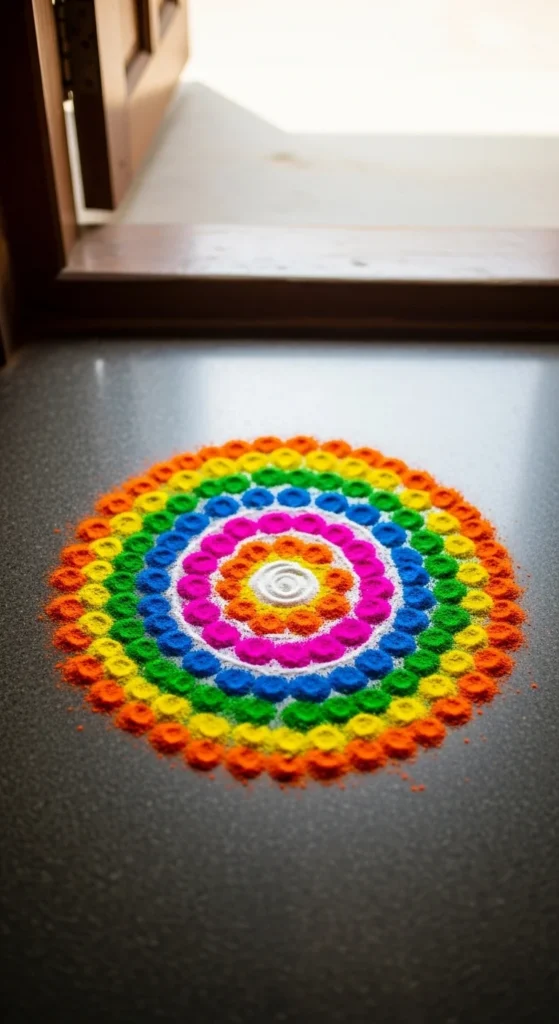
A spiral rangoli creates an artistic look with very little effort.
Start with a small dot in the center. Slowly move your hand outward while releasing powder to form a spiral.
Keep the movement relaxed. Slight irregular curves make the design feel natural.
Add small leaf shapes along the outer spiral line. Alternate colors in different sections to create contrast.
Because the spiral grows outward naturally, you do not need measurements or guides.
This design fits small spaces like apartment hallways or narrow entrances.
6. Rice Flour Border Rangoli
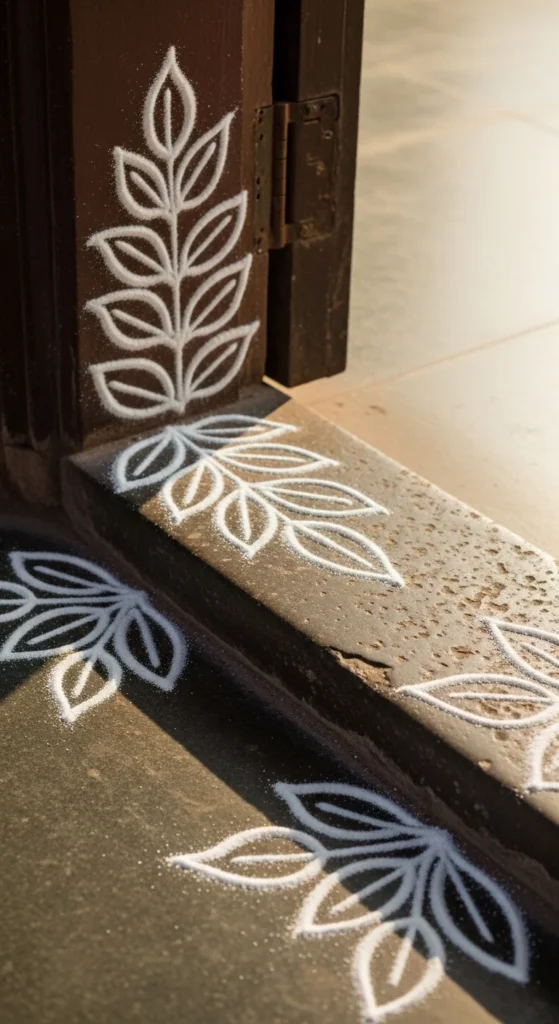
Border rangoli designs decorate the sides of a doorway instead of the center floor.
Use rice flour to draw repeating leaf or vine patterns along the edges of the entrance.
Start with small guide dots and connect them with curved lines to form leaves.
Because the design runs in a straight line, beginners find it easy to create.
Border patterns also pair nicely with a small center rangoli.
Even a simple white border makes the doorway look festive.
7. Eight-Petal Lotus Rangoli
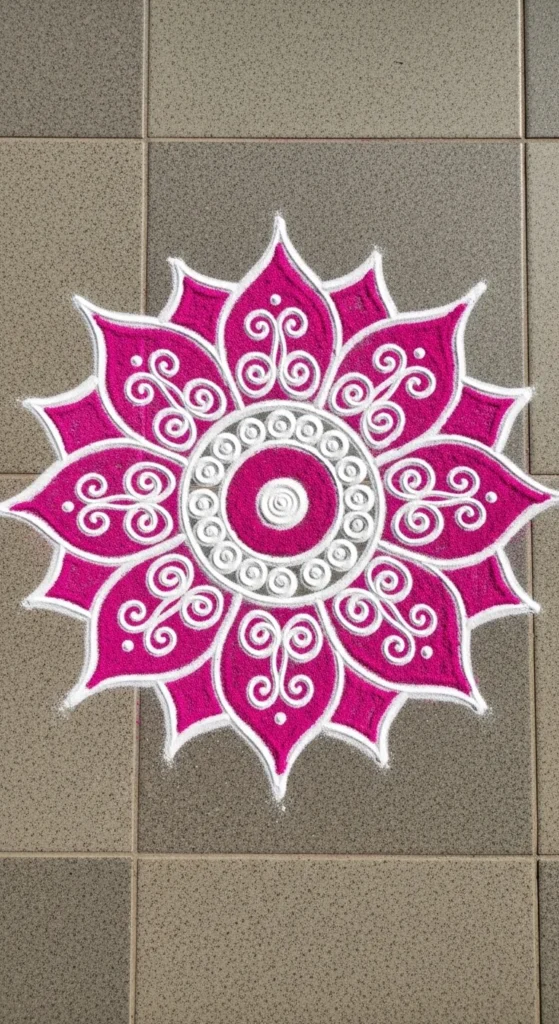
Lotus shapes appear often in rangoli art because they represent positivity and harmony.
Begin with a small circle in the center. Draw eight evenly spaced petals around it.
Fill the petals with pink powder and outline them using white rice flour.
Small yellow dots placed between the petals create additional detail.
The lotus design looks elegant while staying beginner friendly.
8. Simple Peacock Feather Rangoli
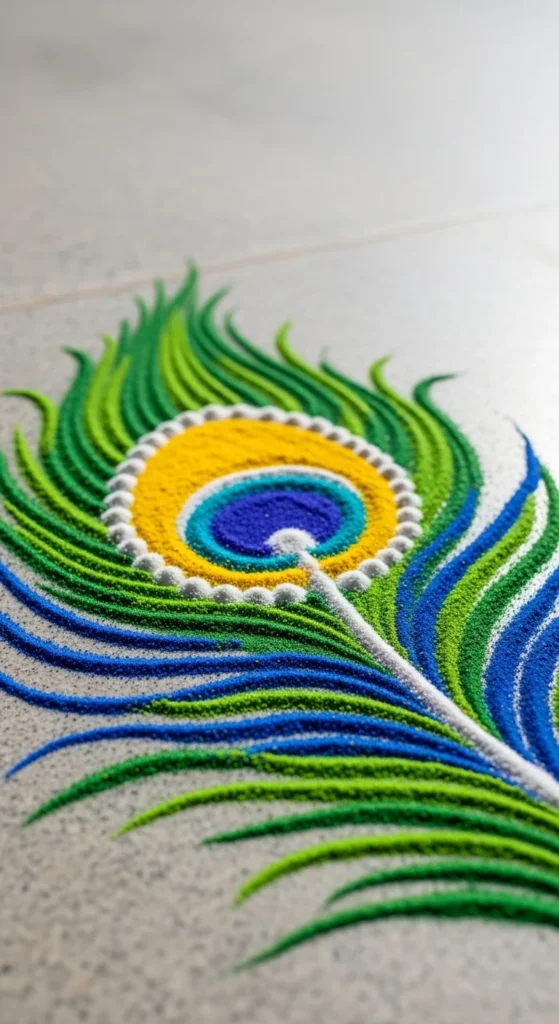
Peacock feather rangoli designs add graceful curves to doorway decorations.
Start with a curved line representing the feather stem. Draw small feather shapes branching outward.
Use green powder for the base and blue powder for the eye of the feather.
Add a yellow center dot to complete the feather.
This design works well as a side decoration near entrances.
9. Minimal Chalk Rangoli
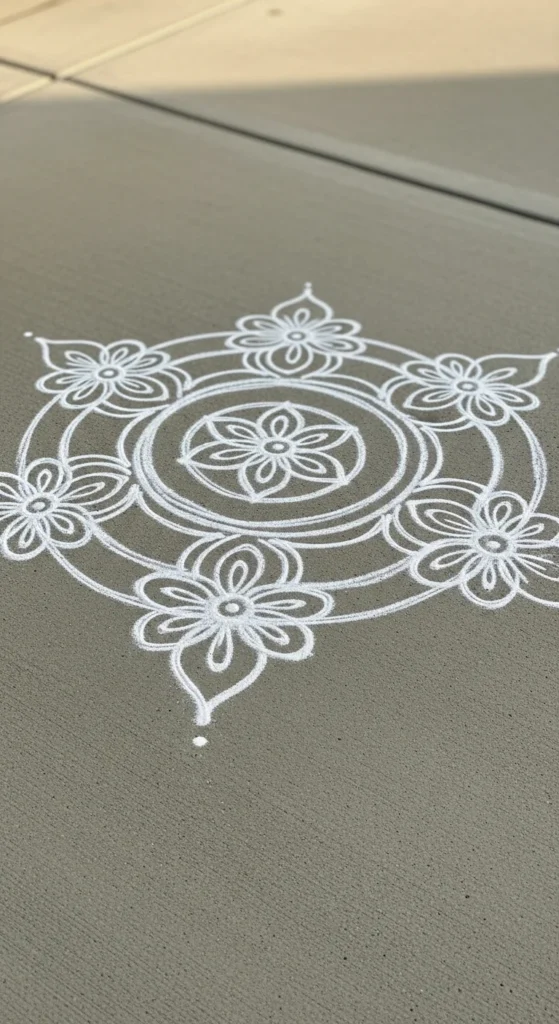
Chalk rangoli is perfect for people who want a mess-free option.
Using chalk sticks, draw circles, petals, or diamonds directly on the floor.
You can color the shapes using colored chalk for a bright look.
Mistakes are easy to erase and redraw.
This method works well for indoor spaces or apartment entrances.
10. Star Pattern Rangoli
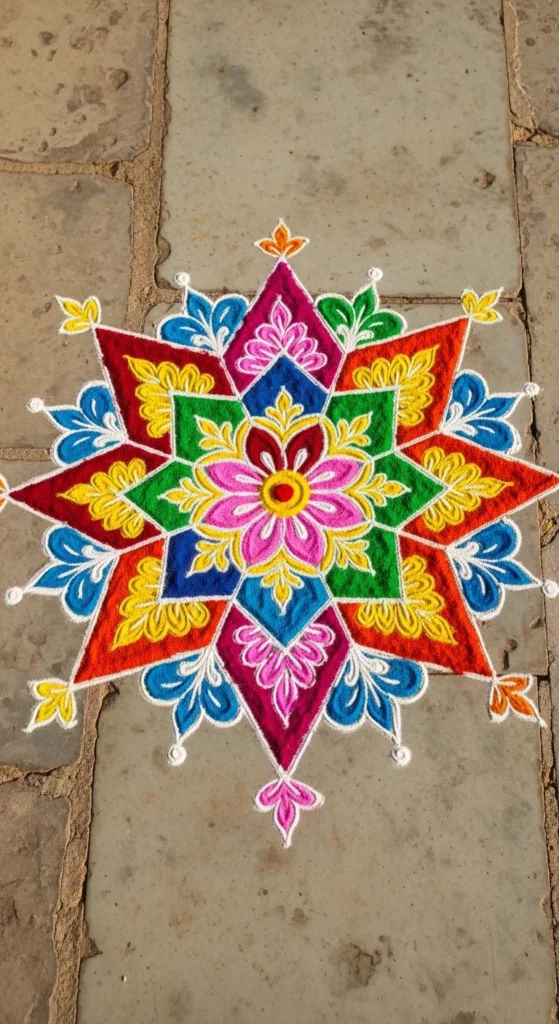
Star patterns create striking rangoli designs with minimal effort.
Draw a large star using chalk. Fill each triangular section with a different color powder.
Outline the edges with white rice flour for contrast.
Place small dots around the star to enhance the pattern.
This design looks festive and works beautifully near doorways.
11. Simple Diamond Grid Rangoli
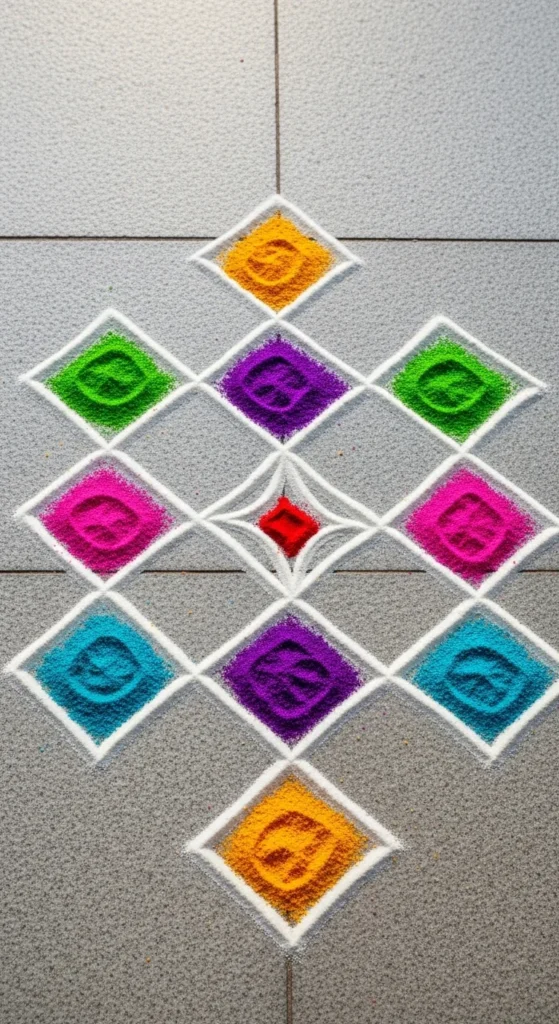
A diamond grid rangoli is a great option if you enjoy geometric designs. It looks structured but is actually very easy to create.
Start by drawing diagonal lines across the floor so they intersect and create diamond shapes. Chalk works well for the outline because it can be corrected quickly.
Once the grid appears, fill alternating diamonds with colored powder. Red, yellow, and blue combinations create strong contrast.
Leave some diamonds white using rice flour so the colors stand out.
This design works well near wide doorways or courtyard entrances. The repeating pattern also allows you to expand the rangoli as large as you want.
If time is limited, fill only the center diamonds with color and leave the outer ones plain.
Another idea is placing a flower petal or small grain pile in the middle of each diamond.
The result looks decorative yet clean, and the pattern takes less time than most people expect.
12. Marigold Border Rangoli
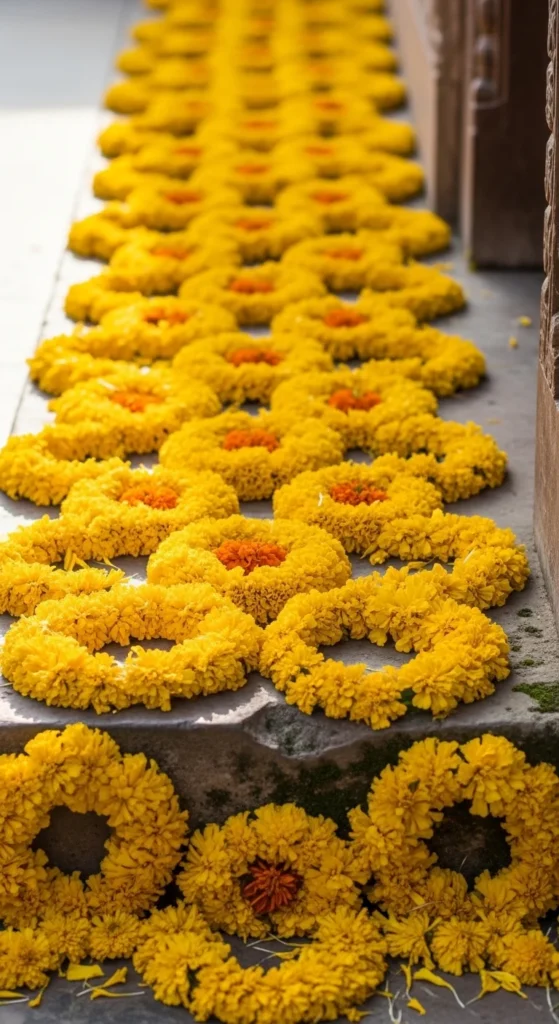
Marigold petals create beautiful rangoli borders that feel festive without much effort.
Start by outlining a border using chalk along the doorway edges.
Fill the outline with bright yellow marigold petals. The color naturally draws attention to the entrance.
You can also alternate marigold petals with rose petals for added contrast.
This design works especially well for festivals and celebrations because flowers instantly add warmth.
It is also beginner friendly since you do not need precise drawing skills.
If you want more detail, place small white rice flour dots along the petal border.
Cleanup is easy. After the event, petals can be composted or placed in the garden.
Many people like this design because it looks traditional yet requires very little preparation.
13. Spiral Flower Rangoli
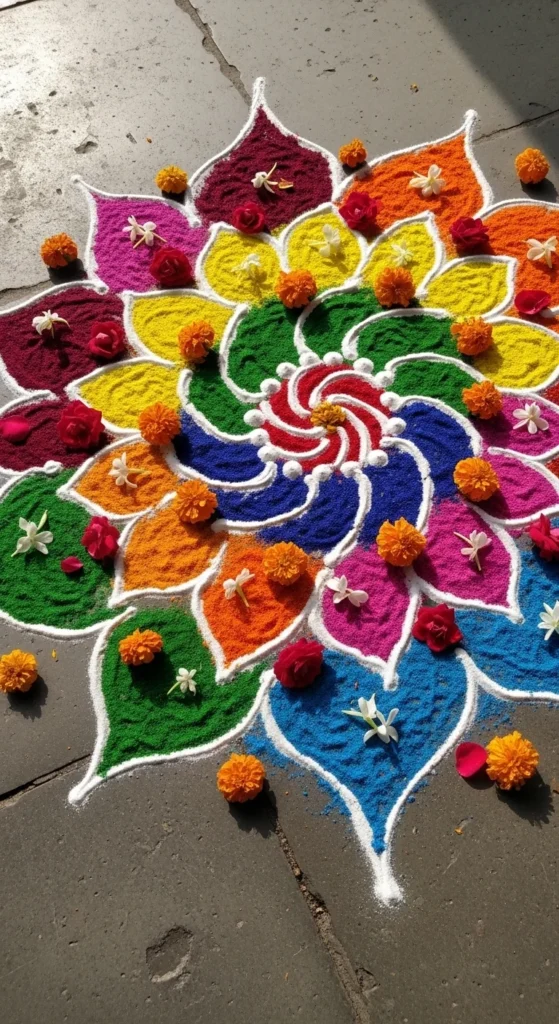
Spiral flower rangoli combines curves and petals to create a lively design.
Begin with a spiral line drawn using white powder.
Along the spiral line, draw small petal shapes that follow the curve.
Fill each petal with bright powder colors such as pink, orange, and yellow.
Because the spiral naturally expands outward, the design fills space easily without complex planning.
You can add small white dots between petals for decoration.
Another option is placing tiny marigold petals inside each flower section.
This rangoli works well in circular spaces like courtyards or patios.
The pattern appears detailed, yet the drawing process stays simple and relaxing.
14. Five-Minute Finger Rangoli
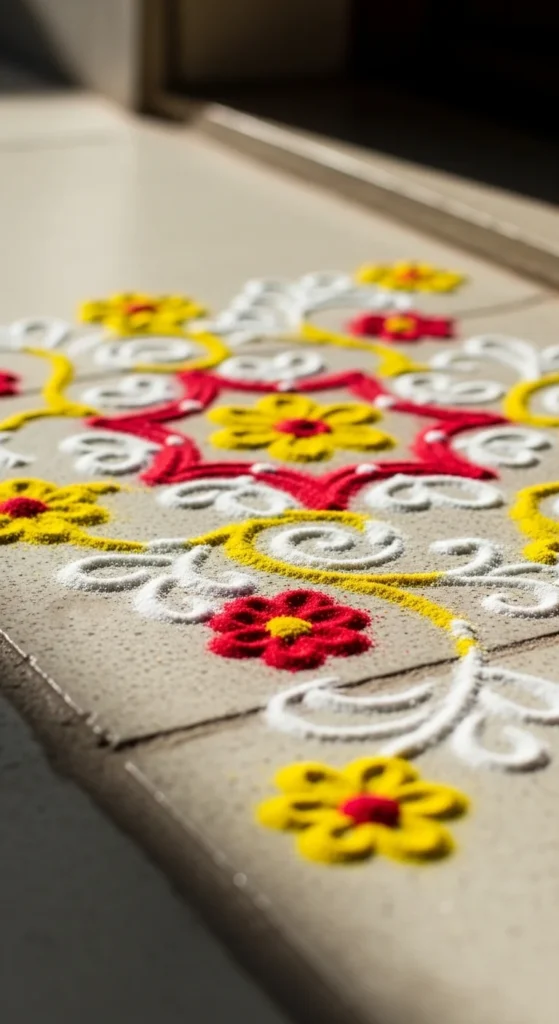
Finger rangoli designs are perfect for quick decorations.
Instead of using tools, pinch a small amount of powder between your fingers and release it slowly while drawing shapes.
Start with a small circle. Add petals or loops around it.
Because finger movement creates natural curves, the shapes appear artistic even if they are not perfectly symmetrical.
This method works best with fine powder such as rice flour.
You can complete a small rangoli in under five minutes.
It is a great choice for daily morning decorations outside the home entrance.
Add colored dots or flower petals if you want extra detail.
The relaxed style makes the design feel natural and welcoming.
15. Simple Heart Rangoli
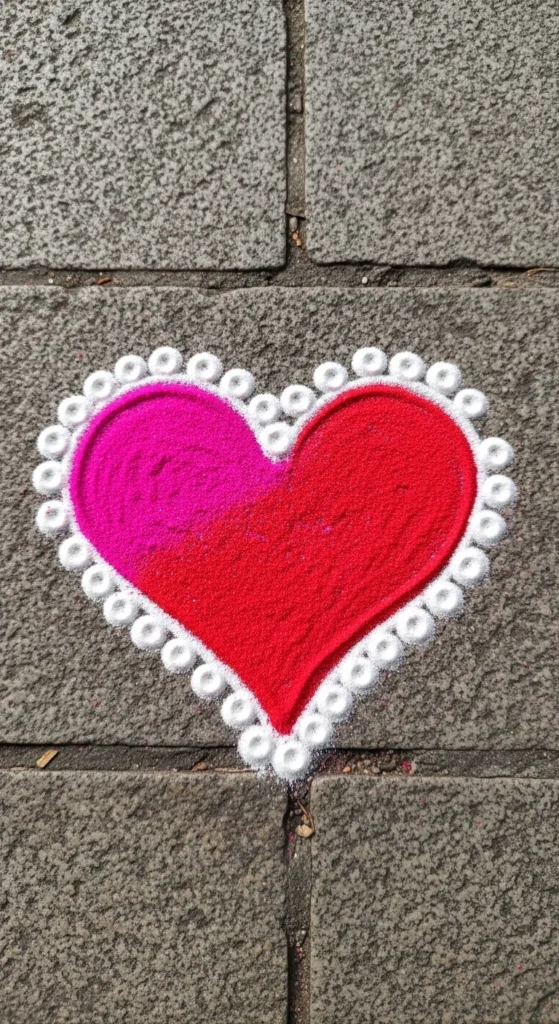
A heart-shaped rangoli is simple yet charming.
Draw a large heart outline using chalk. Fill the inside with bright colored powder such as pink or red.
Outline the heart using white rice flour for contrast.
Around the border, add small decorative dots.
This design works well for celebrations, family gatherings, or wedding decorations.
You can also place flower petals inside the heart instead of powder.
Because the shape is simple, beginners can create it quickly.
Even a small heart design near the doorway adds warmth to the entrance.
16. Circular Mandala Rangoli
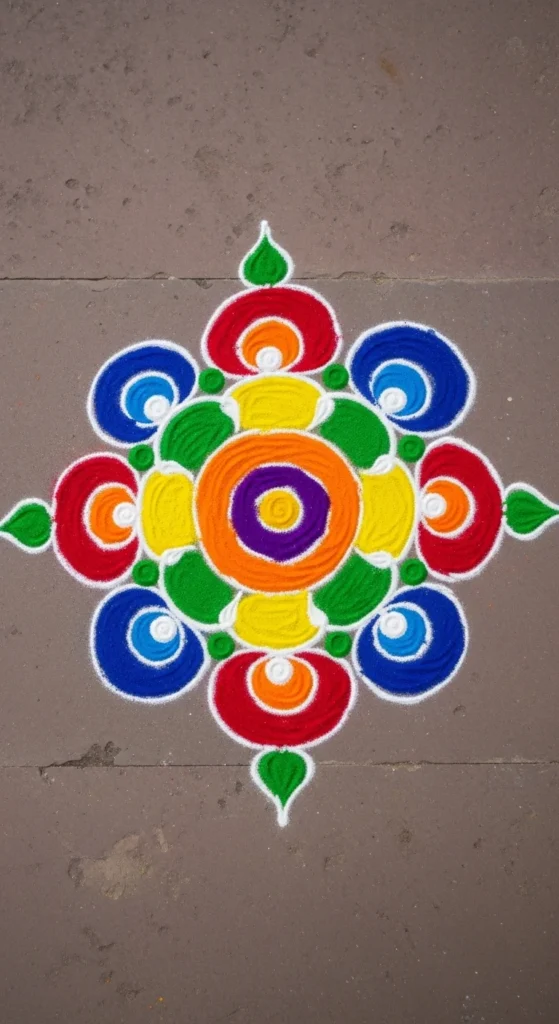
Mandala-style rangoli uses repeating circular shapes.
Start with a small center circle.
Around that circle, draw another ring with small petal shapes.
Continue adding rings outward using different shapes such as dots or triangles.
Fill each ring with different powder colors.
Because the design grows outward step by step, it stays organized and balanced.
Mandala rangoli works beautifully in open spaces like courtyards.
Even a simple three-ring design looks decorative.
17. Grain Rangoli Design
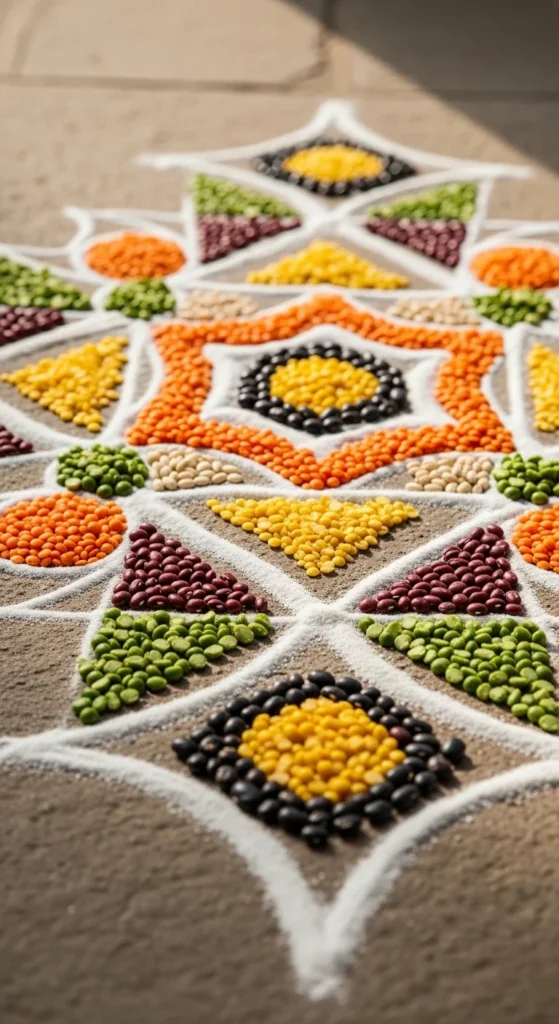
Grain rangoli designs use kitchen ingredients instead of powder.
Rice, lentils, beans, and chickpeas create natural color variation.
Outline a pattern with chalk first.
Then fill each section using different grains.
This design looks textured and unique.
After the event, grains can be placed outdoors for birds.
It is a great option for eco-friendly decorations.
18. Small Star Flower Rangoli
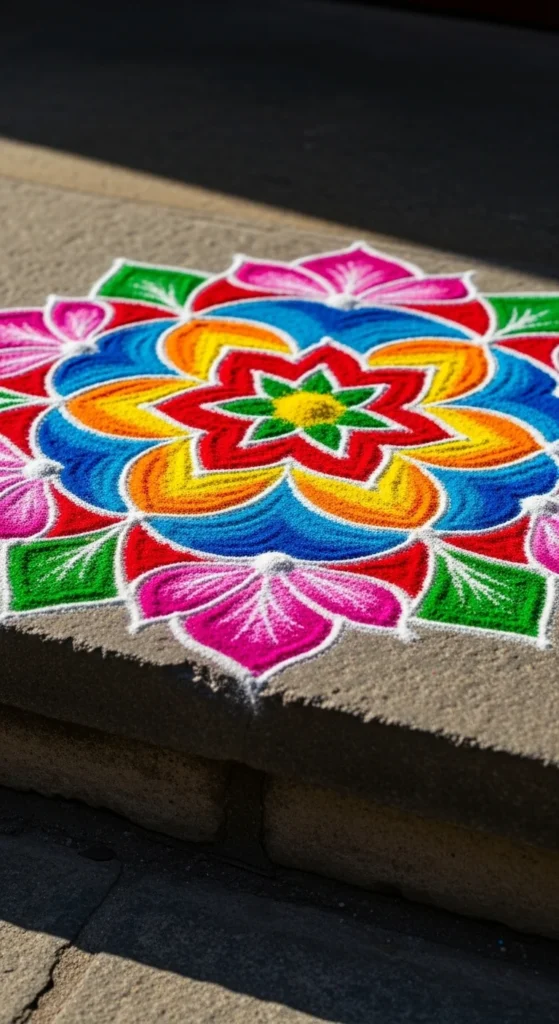
This rangoli blends star and flower shapes.
Start with a star outline.
Between the star points, draw small petals.
Fill each section with contrasting colors.
Add small dots around the outer border.
The result looks festive while staying beginner friendly.
19. Diagonal Line Rangoli
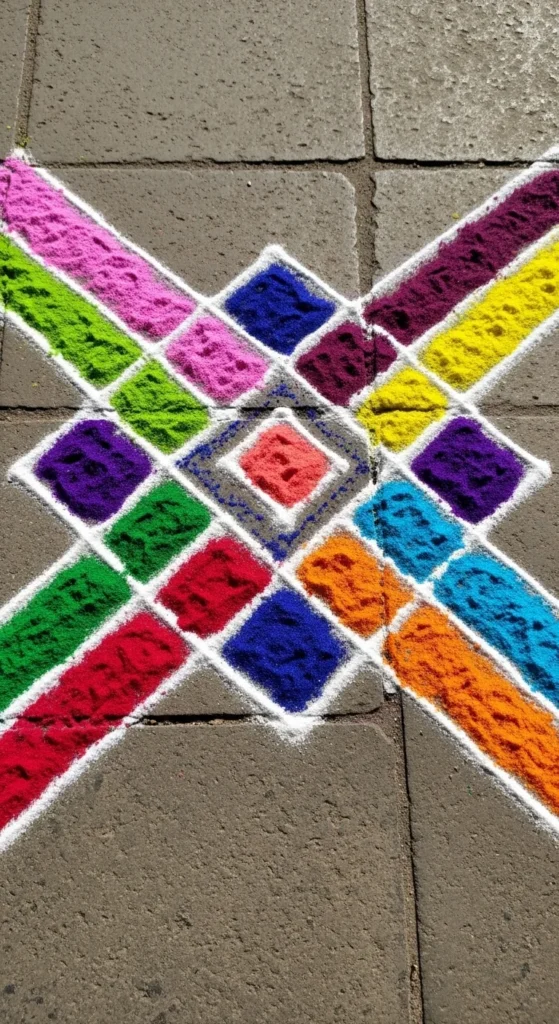
Diagonal line rangoli designs are very simple.
Draw parallel diagonal lines across the floor.
Add crossing lines to create small shapes.
Fill selected shapes with colored powder.
The pattern grows quickly and looks structured.
Even beginners can complete it within minutes.
20. Mango Leaf Rangoli
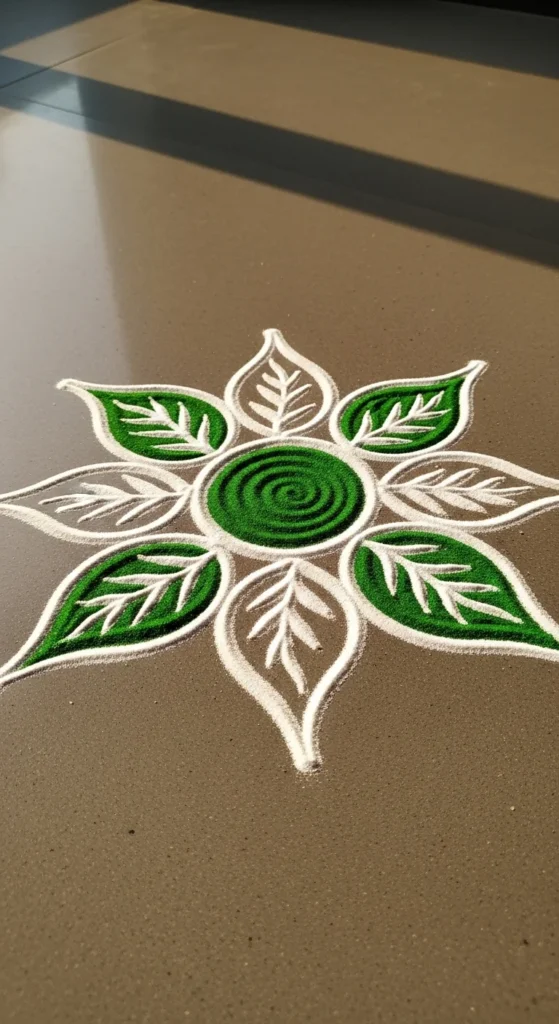
Mango leaf designs symbolize positivity and celebration.
Start with a curved line.
Draw small leaf shapes along the line.
Fill each leaf with green powder.
Add yellow dots between the leaves for decoration.
This design works well as a doorway border.
21. Floating Bowl Rangoli
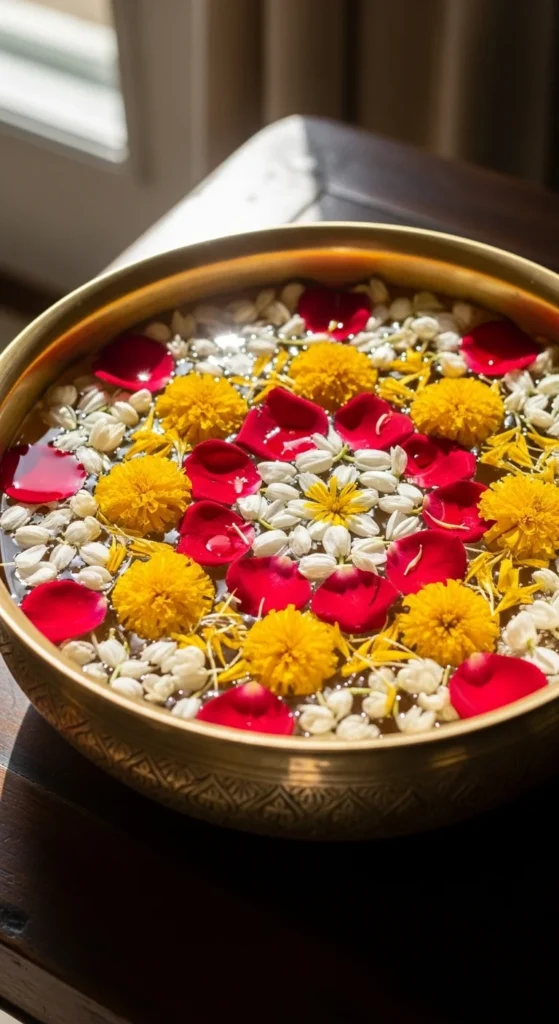
Floating rangoli designs work well indoors.
Fill a wide bowl with water.
Place flower petals on the surface in circular patterns.
Add floating candles for evening decoration.
This option avoids powder mess completely.
22. Half-Circle Entrance Rangoli
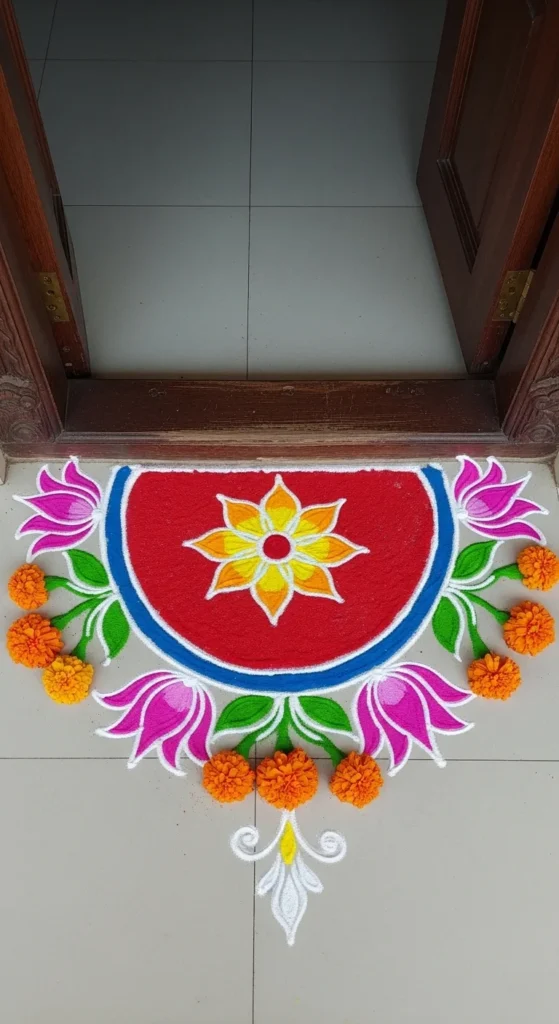
Half-circle rangoli designs fit perfectly at door entrances.
Draw a semicircle touching the doorway.
Add petals and dots within the shape.
Fill the sections with bright colors.
This design saves space and still looks festive.
23. Sunburst Rangoli
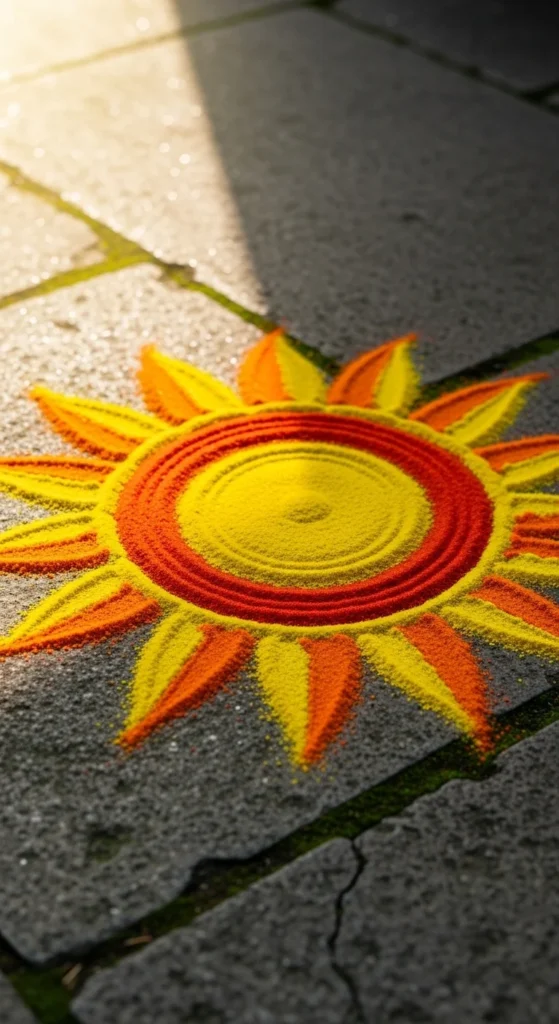
Sunburst designs create a bright festive effect.
Start with a central circle.
Draw straight rays extending outward.
Fill rays with alternating colors.
Add small dots at the ends for decoration.
24. Simple Triangle Rangoli
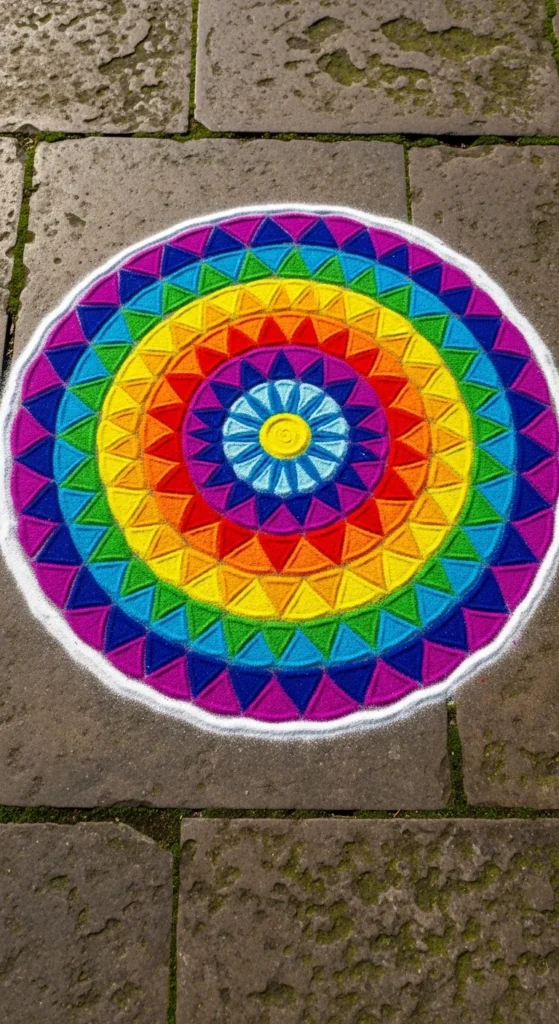
Triangle patterns create geometric rangoli designs.
Draw a circle and divide it into triangle sections.
Fill each triangle with different colors.
Outline shapes with white powder.
This design looks modern yet remains easy to draw.
25. Double Flower Rangoli
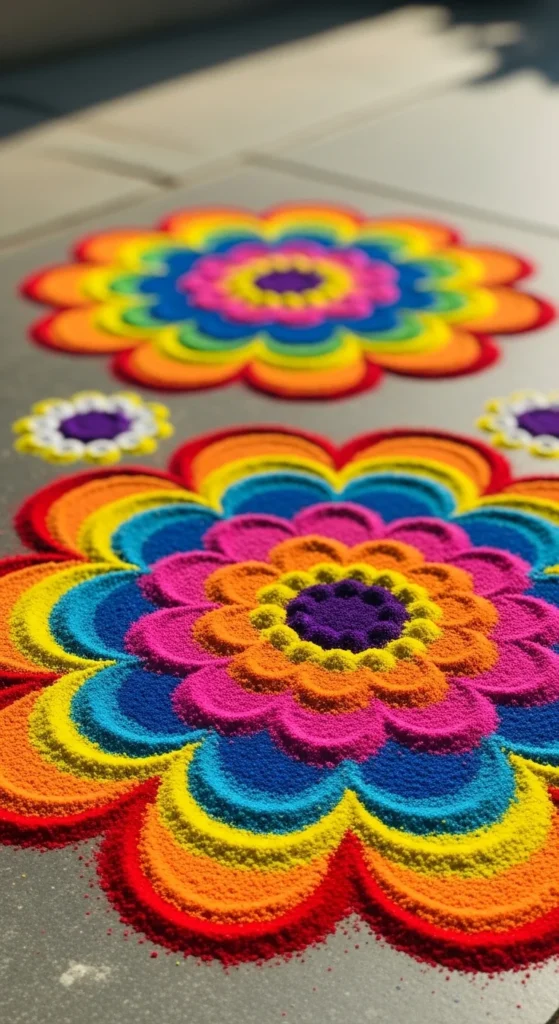
This design uses two flower layers.
Start with a small flower in the center.
Draw larger petals around it.
Fill each layer with different colors.
The layered look creates depth without complexity.
26. Minimal White Kolam Rangoli
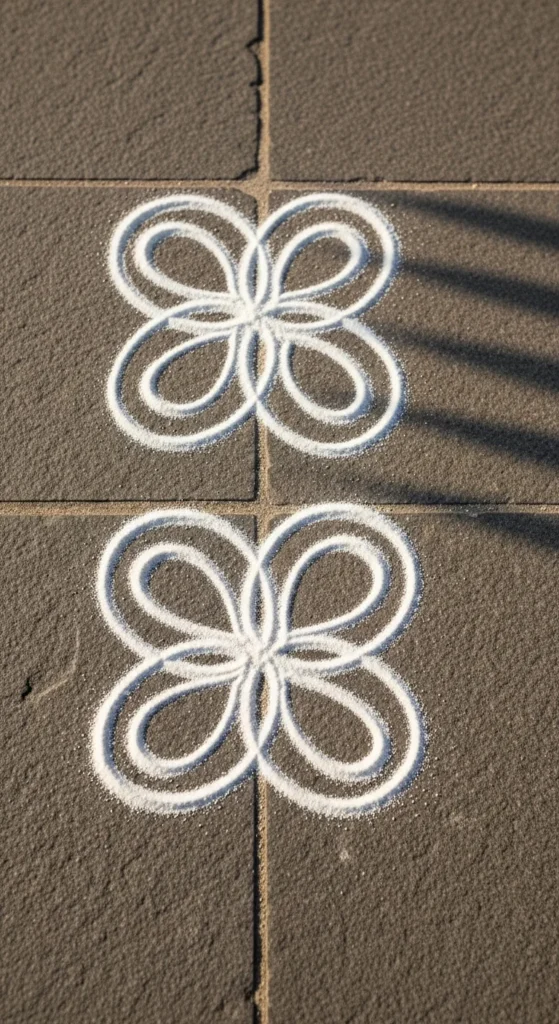
Minimal white kolam designs look elegant and traditional.
Use only rice flour.
Create loops around a small dot grid.
The clean white pattern stands out against darker floors.
This design works well for daily rangoli.
27. Decorative Dot Flower Rangoli
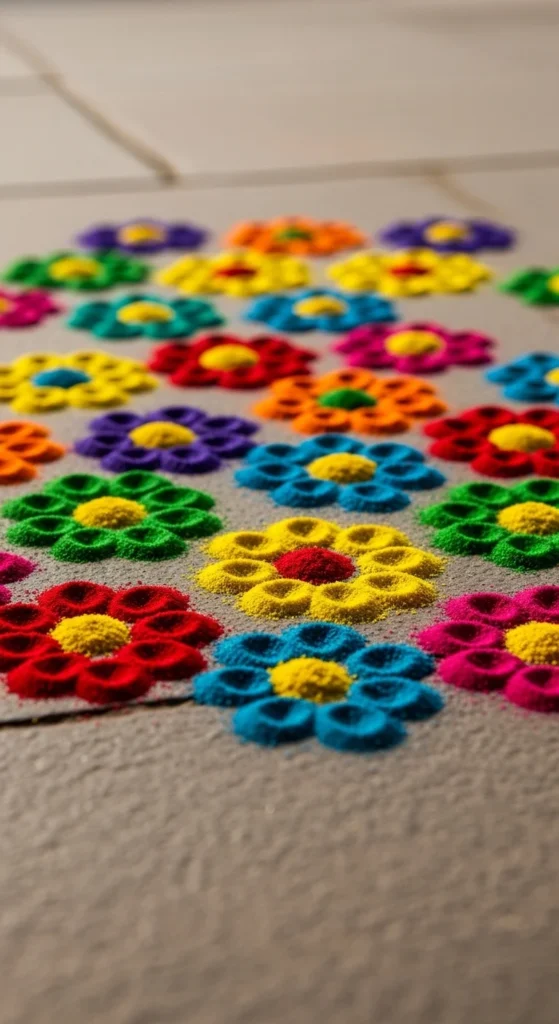
Dot flower rangoli designs are very beginner friendly.
Place colored powder dots in circular patterns.
Connect the dots lightly using small curves.
Add extra dots around the design for decoration.
The pattern grows naturally.
28. Classic Festival Rangoli
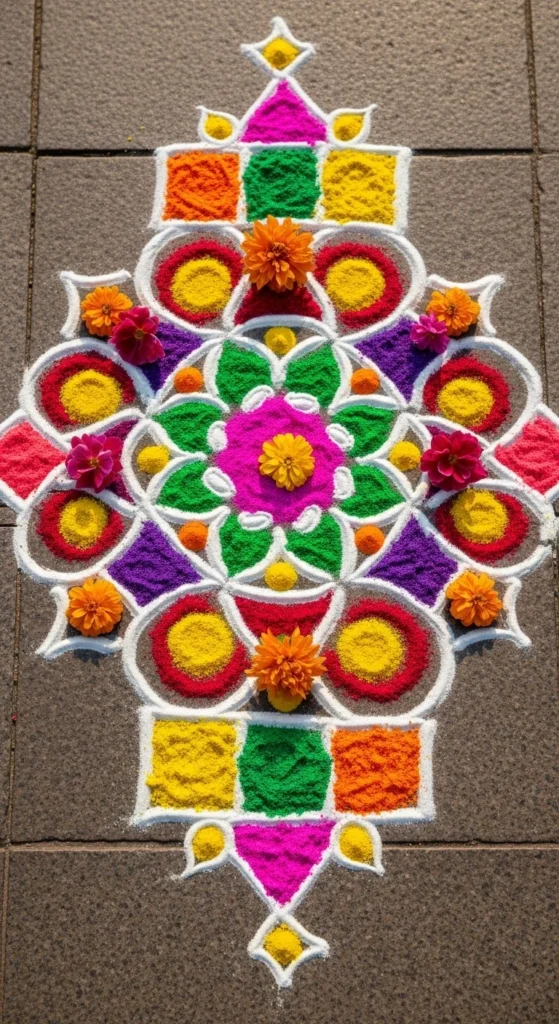
A classic festival rangoli combines several simple elements.
Start with a circle base.
Add petals, dots, and geometric shapes around it.
Use bright powder colors to fill sections.
Place small lamps around the design during evening celebrations.
This rangoli works beautifully for special occasions and gatherings.
Conclusion
Rangoli designs do not require complicated drawing skills. With simple shapes, everyday materials, and a little creativity, anyone can decorate their home entrance beautifully.
These 28 simple rangoli ideas show that even the easiest patterns can look festive and welcoming. Try a flower design one day, a dot grid the next, or a petal rangoli for special celebrations.
A small design at the doorway can instantly bring color, tradition, and warmth to your home.

DiyVisual is a DIY ideas resource for makers of every level. Our small editorial team researches and curates easy, budget-friendly craft, home decor, and handmade gift projects — explained step by step so anyone can recreate them at home with simple materials.