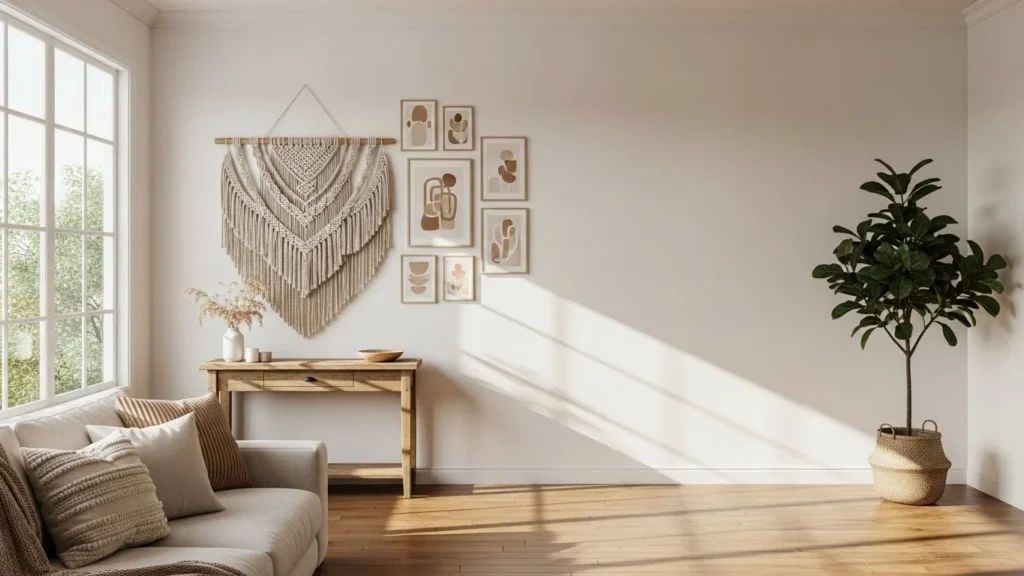
Empty walls can make even a beautifully furnished room feel unfinished. You might have the sofa, rug, and lighting just right, yet that blank space still feels awkward. The good news is you don’t need expensive art or custom frames to fix it. With a bit of planning and simple DIY ideas, you can create wall decor that feels intentional, balanced, and truly part of your home.
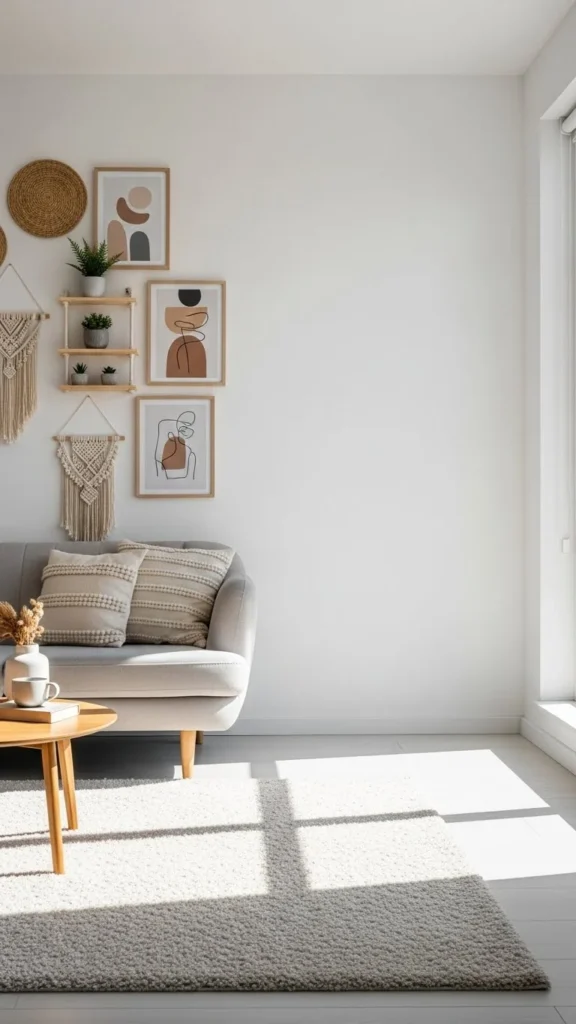
This guide walks you through practical ways to fill empty wall spaces using DIY decor that looks thoughtful rather than random.
Start by Reading the Wall Itself
Before making anything, pause and study the wall. Empty spaces come in different forms, and each one asks for a different solution.
Look at:
- Wall size and shape
- Nearby furniture height
- Natural light hitting the wall
A narrow wall between doors works differently than a wide wall above a sofa. Treat the wall like a frame waiting for the right content, not something you rush to cover.
Quick tip:
Mark the wall area lightly with painter’s tape. This helps you visualize size before committing to a project.
Choose One Main Idea, Not Many
DIY wall decor looks best when it follows a clear idea. Store displays usually center around one theme or shape.
Strong options include:
- A large statement piece
- A structured gallery layout
- Repeated shapes or materials
Avoid mixing too many ideas at once. One wall should not try to show everything you like.
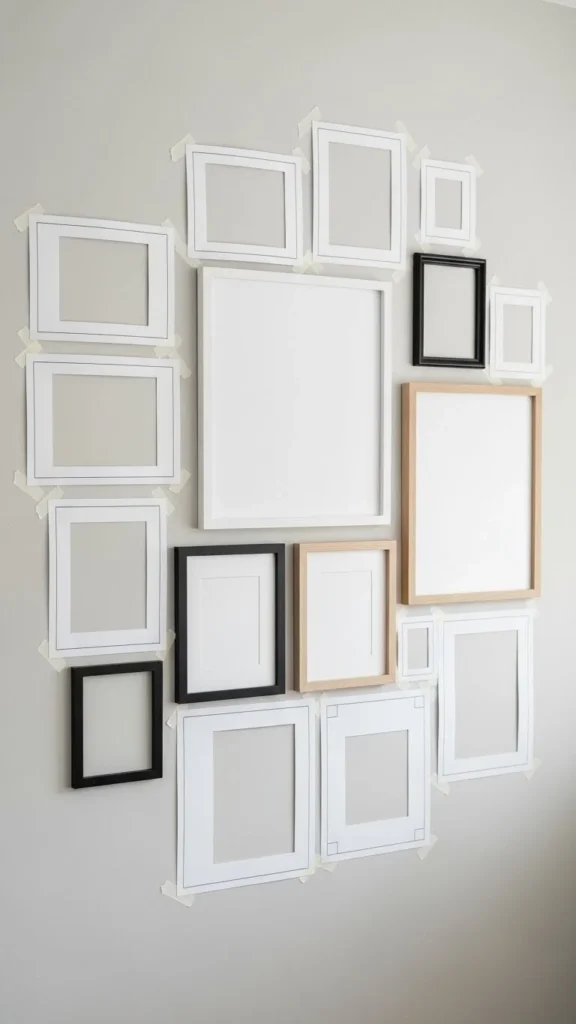
If you feel unsure, start with one central piece and build around it slowly.
Use Scale to Fill Space Properly
One of the most common mistakes is using decor that’s too small. A tiny frame on a large wall feels lost.
General guidelines:
- Large wall → one large piece or a grouped arrangement
- Medium wall → three to five coordinated items
- Small wall → one focused element
DIY doesn’t mean small. You can create large-scale decor with:
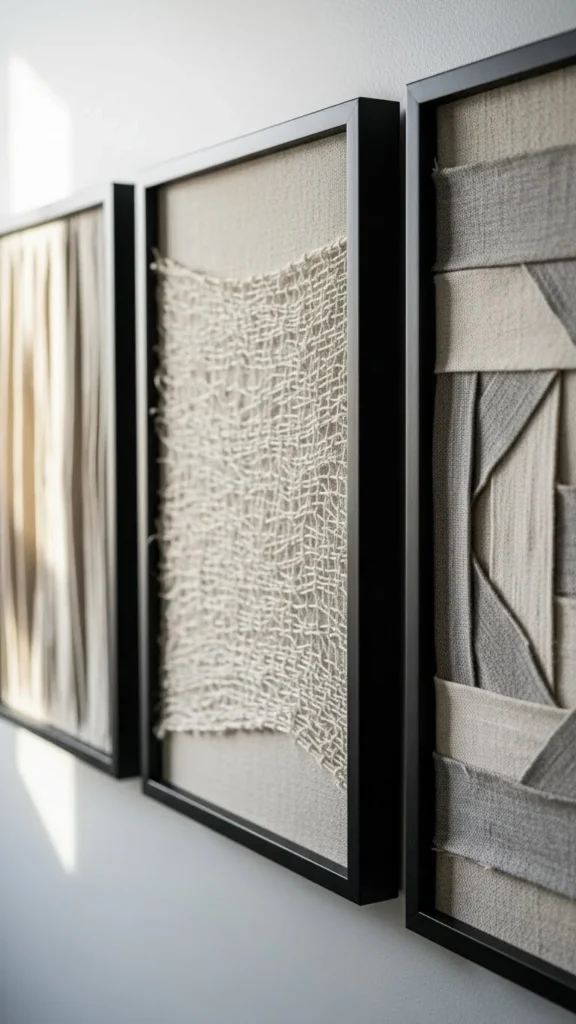
- Fabric stretched over frames
- Painted canvas panels
- Oversized wall hangings
Bigger pieces often cost less than buying many small items.
Try Easy DIY Wall Decor Ideas That Work
You don’t need advanced tools or skills. These ideas are beginner-friendly and adaptable.
Framed Fabric or Paper Art
- Use neutral fabric, wallpaper samples, or textured paper
- Frame them in matching frames
- Hang in a grid or row
Wooden or Cardboard Panels
- Cut into simple shapes
- Paint in one calm color
- Mount with removable strips
Minimal Wall Shelves
- One or two slim shelves
- Style with plants, books, and small objects
- Leave negative space between items
These projects fill space without overwhelming the wall.
Balance the Wall With Furniture Below
Wall decor should connect visually with what sits underneath it.
Above a sofa or console:
- Keep decor width around two-thirds of the furniture width
- Hang items lower than you think feels right
- Leave a small gap so the wall and furniture feel connected
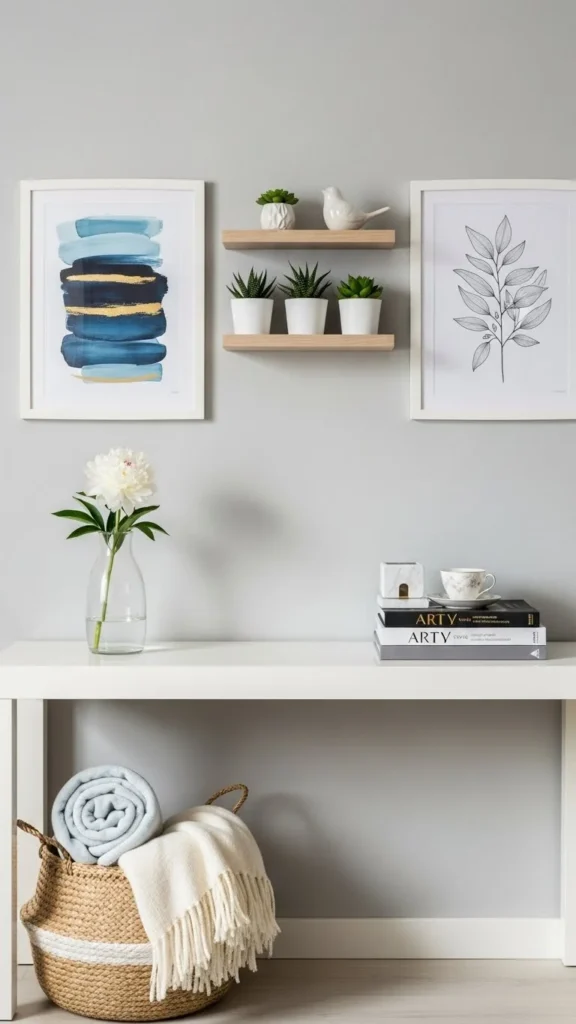
If something feels off, adjust height before adding more items.
Use Repetition for a Cohesive Look
Repetition is what makes DIY decor feel planned instead of scattered.
Repeat:
- The same frame color
- The same shape
- The same material
For example:
- Three circular wall hangings
- Five black frames with different art
- A series of wooden panels
This approach fills space while keeping the look calm and organized.
Add Texture Instead of More Objects
If the wall still feels flat, texture often works better than adding more decor.
Texture ideas:
- Macramé or woven hangings
- Layered paper or cardboard art
- Fabric wall panels
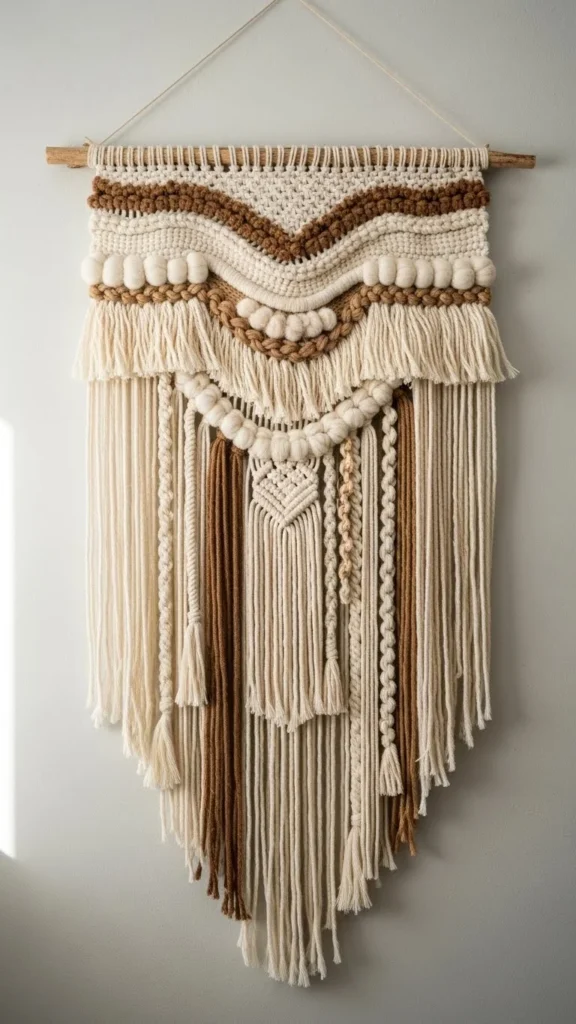
Texture adds depth and interest without crowding the wall.
Step Back and Edit
Once everything is up, step back. Editing is part of the process.
Ask yourself:
- Does anything feel crowded?
- Is there enough empty space left?
- Does the wall match the room’s mood?
Removing one item often improves the overall look.
Final Takeaway
DIY wall decor works best when it fills space with intention, not clutter. By choosing the right scale, sticking to one idea, and focusing on balance, you can turn empty walls into features that anchor the room.
Save this guide for your next weekend project, and start with just one wall. Small changes can make a room feel complete.

DiyVisual is a DIY ideas resource for makers of every level. Our small editorial team researches and curates easy, budget-friendly craft, home decor, and handmade gift projects — explained step by step so anyone can recreate them at home with simple materials.